
“From these wastelands strange piles of basalt gleamed darkly in the sun – weird masses of stone too regular to be called the work of nature, too unthinkably ancient to be the work of man.” – Karl Edward Wagner, Darkness Weaves

A half-century ago, they say, you could walk to the bottom of the Bewl Valley in summer and jump over the river to get to the other side.
Then they filled it to brimful with 31 million tonnes of water held back by a two-kilometre concrete rampart, creating the largest body of inland water in South East England and the only British reservoir to span two counties.
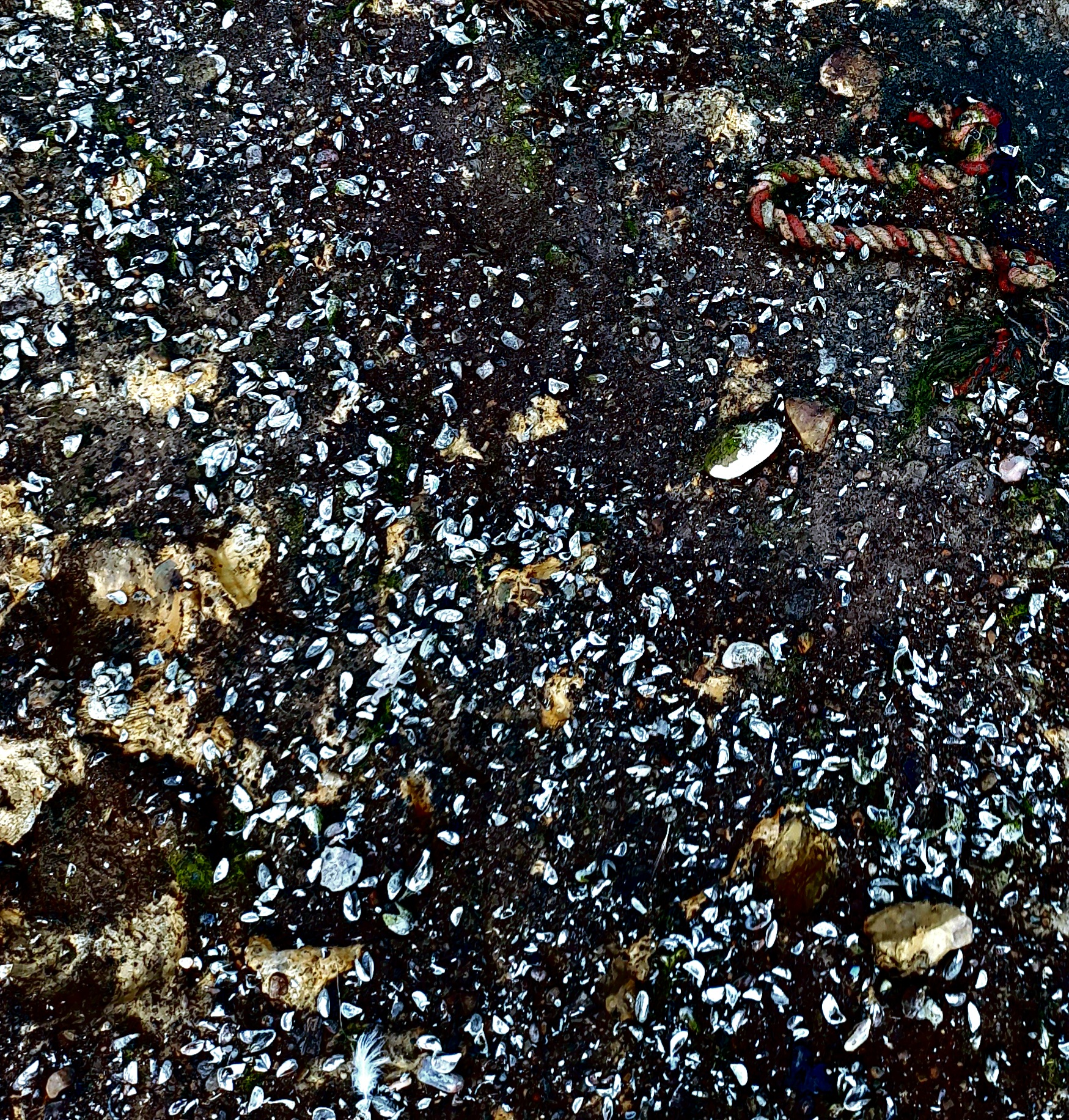
I first visited on a summer’s day. The water level had fallen low enough to expose a cracked expanse of sun-baked mud-flats beyond the shingle beaches of the winter shore. A hinterland of mud speckled with countless shell fragments, I think from herring gulls smashing open riverine mussels, provided a satisfyingly crunchy pathway between the two landscapes.
More romantic lakes whisper of sinuous prehistoric megafauna or long-drowned church-bells tolling beneath their waters on moonless nights.
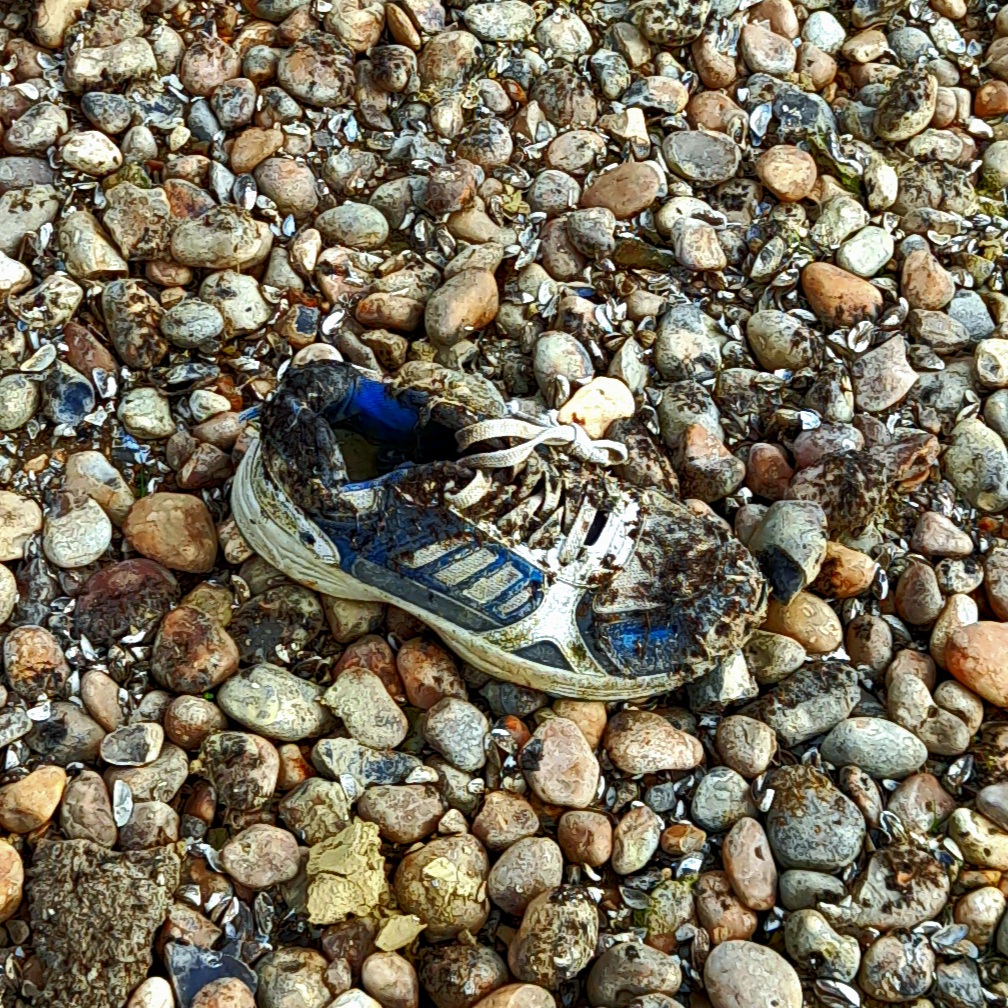
Bewl Water’s submerged treasures comprised a trove of lonely and decaying leisure shoes…

Rusty chains…


Ropes imitating the action of a viper…

And – albeit always in conjunction with one of these others – chunky construction-vehicle tyres.


I am sure there exists an explanation – simple, quick, and stultifyingly prosaic – as to why these particular elements alone remain from the panoply of human effluvia doubtless dumped in the Medway every day.
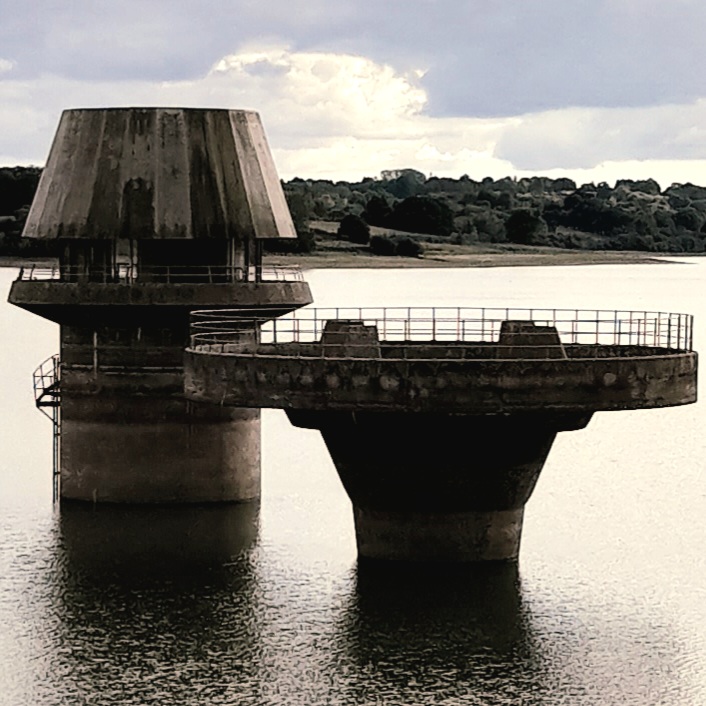
I will reject on principle any that do not somehow relate to whatever dwells within the mismatched towers that keep blind vigil over the sluices.
Some years ago I visited the interior of the old Battersea Power Station as part of a work event, back when it was still a colossal wreck from a bygone age that no-one could ever quite seem to find an enduring purpose for.
For me, at least, it had an atmosphere closer to somewhere like Silbury Hill than, say, Hinkley Point or Windscale, with the generation of electricity quite incidental to what one might call its monumental purpose. Primarily, it seemed a building that said something about how the people who built it conceived of themselves as a people, in terms of what they did.
(I am confident that Battersea’s builders conceived of themselves as a people who did industry and technology. I am equally confident my inability to interpret what Silbury’s builders wanted to express about themselves – besides, of course, their capacity to construct a big fake hill out of chalk – is a function of its greater antiquity and not because no such message was intended.)
I have not been back to Battersea since it was re-developed. I do not know what it says about how we conceive of ourselves now. I am fairly sure we are no more a people who do industry and technology than we are a people who do constructing big fake hills on Salisbury Plain.
Bewl Water seems to me a little like this too. No reservoir of comparable size has been built in the United Kingdom since 1992, and that would have been finished sooner had its dam not partially collapsed during construction.
The nearest town to where I currently live was without piped water for two weeks last summer. I suppose public works are not what we do any more, either.
 Somebody Always Drowns
Leave a comment